Screen scraping built the first generation of open banking. Aggregators like early-era personal finance tools asked users for their bank login credentials, logged in as that user, and extracted transaction data by parsing raw HTML. It worked. It also handed third parties the keys to the entire account. Token-based API access exists to fix that. But calling tokenization a complete solution overstates where the industry actually stands in 2026.
This article examines the tokenized account access architecture, why it is structurally superior to credential sharing, what the remaining attack surfaces look like, and what engineers and compliance officers need to watch as regulatory requirements tighten globally.
The Credential Sharing Problem Screen Scraping Created
Screen scraping required users to hand over their username and password to a third-party aggregator. The aggregator then stored those credentials, often encrypted but sometimes in recoverable form, and used them on a recurring schedule to pull fresh data. From a security standpoint, this created several compounding problems.
First, the bank had no reliable way to distinguish a legitimate customer login from an aggregator bot. Rate limiting and bot detection would break the aggregator's service, so banks often had to tolerate what looked like automated abuse of their authentication systems. The 2018 joint statement from US federal banking regulators, including the OCC, FDIC and Federal Reserve, specifically called out the risks of this model for both consumers and institutions.
Second, the permission scope was unlimited. When a user handed credentials to a budgeting app, that app technically had access to wire transfers, bill pay, and account settings, not just read-only transaction history. The user's intent was narrow. The technical access was not.
Third, account compromise attribution became nearly impossible. If credentials were phished or leaked, forensic teams could not easily determine whether the breach originated at the bank or at one of the three aggregators holding the same credentials. Liability was murky and recovery was slow.
Screen scraping persists today in markets without mandated APIs. In regions where banks have deployed compliant open banking infrastructure, it is declining but has not disappeared. That gap matters for risk assessments in 2026.
How Token-Based API Access Works
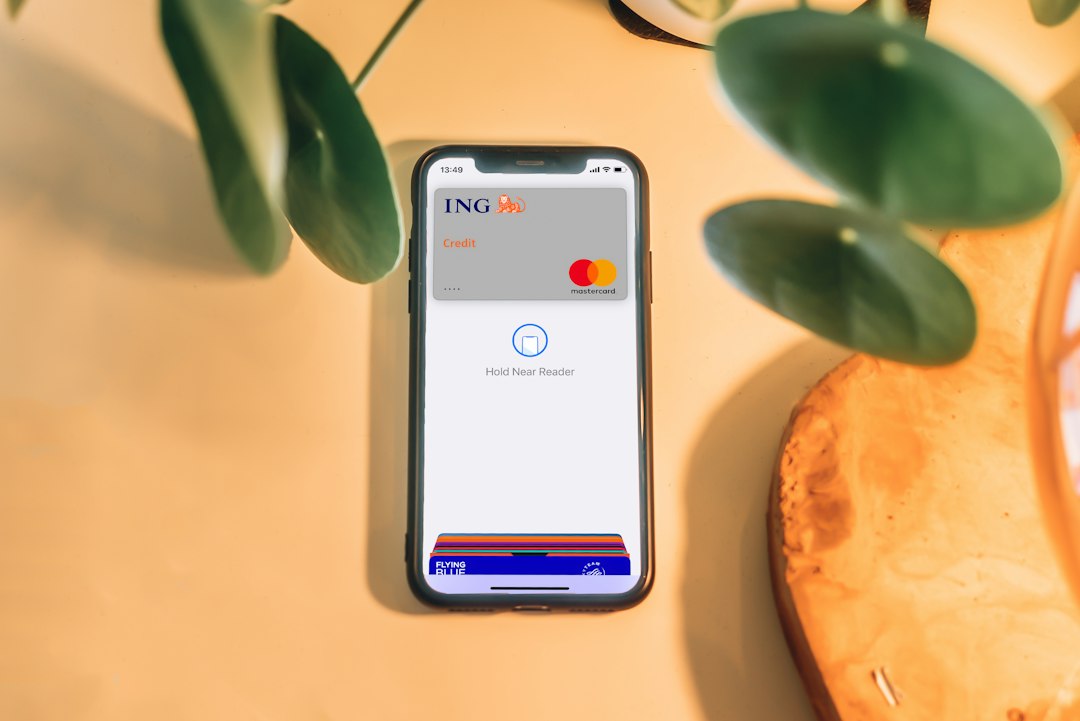
Token-based access replaces stored credentials with short-lived, scoped authorization tokens. The user authenticates directly with their bank, which issues a token to the third-party application. That token encodes specific permissions, a defined expiration, and a binding to the requesting application's client identifier. The third party never sees the user's password.
The token itself is typically a JSON Web Token (JWT) or an opaque reference token pointing to a server-side session record. In open banking implementations following the Financial-grade API (FAPI) profile, tokens are bound to the specific API endpoints the consumer authorized and carry hard expiration windows, often measured in minutes for access tokens with refresh token rotation enforced.
Token revocation is the architectural shift that matters most. Under the credential model, revoking a third party's access meant changing the bank password, which broke every other service using that password. Under the token model, the bank can revoke a single token, or the consumer can revoke it through a consent management dashboard, without touching authentication credentials at all. The blast radius of a compromise shrinks from account-wide to scope-limited.
Refresh token rotation adds another control layer. When a refresh token is used to obtain a new access token, the old refresh token is invalidated. If an attacker steals and uses a refresh token, the legitimate session breaks, creating a detectable signal for fraud monitoring systems.
OAuth 2.0 and Open Banking Authorization Frameworks
OAuth 2.0 is the foundation most open banking token frameworks build on. The UK Open Banking Implementation Entity (OBIE) standardized an OAuth 2.0 profile with additional controls under its Open Banking Standard. In the European Union, the Revised Payment Services Directive (PSD2) mandated that banks expose standardized interfaces, with token-based access required for regulated Third Party Providers (TPPs).
The Financial-grade API (FAPI) security profile, maintained by the OpenID Foundation, addresses OAuth 2.0's weaknesses in high-value financial contexts. FAPI 2.0 requires Demonstrating Proof of Possession (DPoP) or Mutual TLS (mTLS) for sender-constrained tokens. This closes a significant attack vector: stolen bearer tokens become useless to an attacker who cannot prove possession of the corresponding cryptographic key.
In the United States, Section 1033 of the Dodd-Frank Act established consumer rights to financial data access. The CFPB's final rule implementing Section 1033, finalized in late 2024 and now in phased compliance enforcement in 2026, requires covered data providers to implement qualified interfaces that support token-based, credentialless access for authorized third parties. The rule explicitly targets elimination of screen scraping as a primary access method.
For engineers implementing these flows, the practical checklist includes: PKCE for authorization code flows, strict redirect URI validation, token binding where supported, and short access token lifetimes with rotating refresh tokens. The OpenID Foundation's FAPI 2.0 Attacker Model document is the reference specification that compliance teams should treat as mandatory reading, not optional guidance.
Measurable Security Gains from Tokenized Access
Tokenization's security improvements are concrete, not theoretical. Moving from credentials to tokens eliminates the most common aggregator breach vector: credential database compromise at the aggregator. In the credential model, a breach of a single aggregator exposed credentials usable across every bank that user connected. Token databases, by contrast, contain scope-limited, expiring tokens that are useless without the corresponding client secret or private key.
Scope restriction directly reduces fraud surface. A budgeting application granted read-only access to transaction history cannot initiate a payment, even if its token is stolen. Under the credential model, that constraint did not exist technically, only contractually, and contracts do not stop automated attacks.
Consent audit trails improve forensic capability. Token-based systems generate structured logs: when authorization was granted, to which application, for which data scopes, and when the token was last used. This structured record makes incident response faster and supports regulatory reporting requirements under frameworks like GDPR Article 30 and the CFPB's Section 1033 data access records obligations.
For fraud detection systems specifically, token metadata provides behavioral signals that raw credential reuse did not. Anomalous token usage patterns, requests from unexpected IP ranges, unusual data volume pulls within a permission scope, and out-of-pattern API call sequences can all feed machine learning detection pipelines. The structured nature of API access creates the data quality that detection models need. At ownmydata.ai, the data access architecture documentation discusses how structured consent signals improve downstream anomaly detection in permissioned data ecosystems.
What Tokenization Has Not Solved
Token-based access is not a complete security solution. Several problems persist and some are structural to the open banking model itself.
Consent Transparency Remains Weak
OAuth consent screens are notoriously opaque. Studies from academic groups examining open banking UX have documented that users routinely authorize broader scopes than they intend because permission descriptions are vague. Saying "access your account information" does not communicate to a consumer that this includes 24 months of transaction history, payee details and balance data pulled on a daily schedule. FAPI addresses the technical token security layer but does not mandate consent screen readability standards.
Token Proliferation Creates Management Complexity
Enterprise users connecting multiple financial applications accumulate dozens of active tokens across institutions. Centralized token management dashboards exist in some implementations, notably the UK Open Banking app store model, but cross-institution, cross-jurisdiction token management is not standardized. A consumer in 2026 connecting accounts across banks in different regulatory zones cannot manage all active tokens from a single interface. This is an identity management problem as much as a fintech problem.
Third-Party Application Vetting Is Inconsistent
Token-based access requires a client registration step where the third-party application is issued a client ID and secret by an authorization server. The security of this registration process varies widely. In PSD2-compliant markets, TPPs must hold a license from a national competent authority, providing a regulatory filter. In the US market, the CFPB's Section 1033 rule establishes criteria for "qualified third parties" but the enforcement mechanism is still developing as of 2026. Malicious applications can obtain client registrations in lax implementations and use legitimately issued tokens for data harvesting at scale.
Downstream Data Sharing Is Invisible
When a consumer grants a fintech application access to transaction data, that application may re-share or sell that data to data brokers. The token controls what data the app can pull from the bank. It does not control what the app does with data after it is pulled. Data minimization obligations under CCPA, GDPR and the CFPB's Section 1033 rule address this contractually and legally, but technical enforcement at the API layer does not exist today. This is an area where privacy-enhancing technologies, including secure enclaves and data clean rooms, are being piloted but not yet deployed at scale. The mydatakey.org project documentation outlines one approach to linking data use obligations cryptographically to the consent record itself.
Regulatory Landscape in 2026
The global regulatory environment for open banking data access is more fragmented than the technical standards suggest. Three major frameworks are shaping how tokenized access is implemented across jurisdictions.
In the European Union, the proposed Financial Data Access (FIDA) regulation extends PSD2-style mandated access beyond payment accounts to include investment accounts, insurance data and pension records. FIDA is in late legislative stages and will significantly expand the scope of tokenized consent frameworks in EU markets.
In the United Kingdom, the post-Brexit open banking regime continues under the Joint Regulatory Oversight Committee (JROC) roadmap, moving toward a broader smart data economy framework. The JROC roadmap calls for standardized token management infrastructure across participating institutions by 2027.
In the United States, the CFPB's Section 1033 final rule creates phased compliance timelines. The largest depository institutions face the earliest deadlines. Community banks and credit unions have extended timelines. Screen scraping is not banned outright but the qualified interface requirement creates strong regulatory incentive to deprecate it. Banks that maintain compliant API infrastructure are not required to permit screen scraping as an alternative access method.
The Bank for International Settlements (BIS) Innovation Hub has published research on cross-border token interoperability under its Project Aurora and related workstreams, examining how token-based financial data flows interact with AML obligations at jurisdictional boundaries. This remains an open technical and policy question.
Implementation Considerations for Fintech Engineers
For engineers building or evaluating tokenized account access systems in 2026, the implementation decisions that carry the most downstream risk are worth naming explicitly.
Token storage at the application layer must match the threat model. Access tokens with short expiry windows can be held in memory. Refresh tokens require persistent storage with encryption at rest, strict access controls and rotation enforcement. Storing refresh tokens in browser localStorage without additional controls is not acceptable in a financial application context regardless of the token's scope limitations.
mTLS for API-to-API calls provides server-to-server token binding that bearer token models do not. Where the authorization server supports it, this should be the default for any connection handling financial data. The overhead is real but manageable, and the security gain in eliminating stolen token replay attacks justifies it.
Consent management UI must be treated as a security control, not a UX afterthought. Granular scope display, plain-language permission descriptions, visible expiration dates and one-click revocation paths directly affect whether users make informed authorization decisions. Vague consent screens are both a regulatory risk under GDPR and CCPA and a long-term trust liability for the platform.
Audit logging for token issuance, use, refresh and revocation should feed directly into the organization's SIEM or fraud detection pipeline. The structured signal from API access logs is more actionable than anything screen scraping could produce, but only if the logging pipeline captures it with sufficient granularity. NIST SP 800-92 provides the baseline log management framework applicable here.
Tokenized account access is a genuine improvement over credential sharing. The remaining problems are real but they are problems the industry can see clearly now because the token model makes them visible. That visibility is itself progress.